
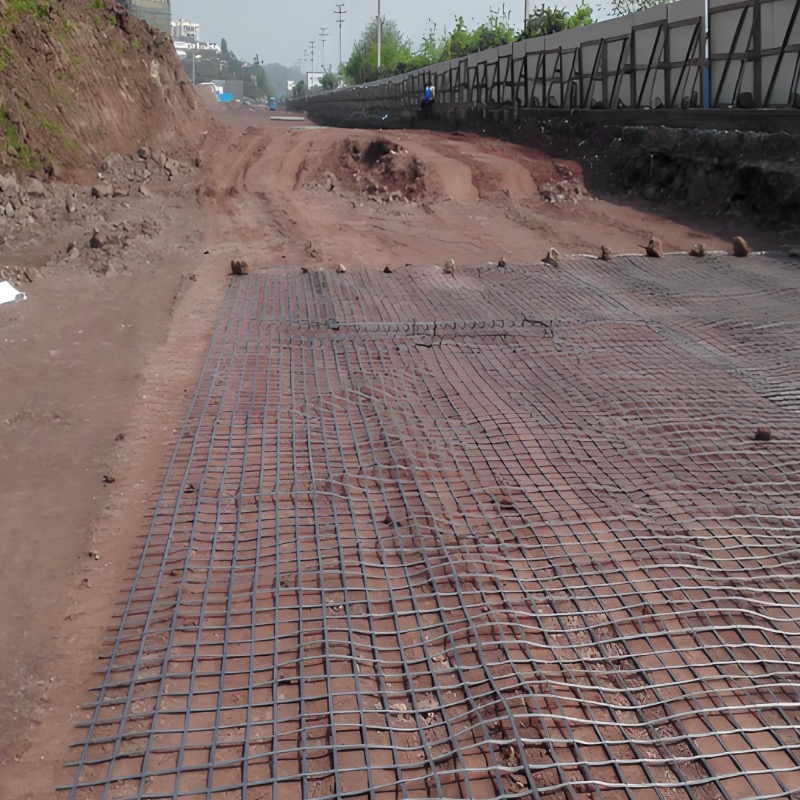
Retaining wall grids — more precisely geogrid reinforcement used in Mechanically Stabilized Earth (MSE) retaining walls — are the backbone of modern, flexible, economical earth-retaining structures. These high-tensile polymeric grids are embedded horizontally within compacted granular backfill behind a facing (segmental concrete blocks, welded-wire panels, wrapped geotextile face, or precast elements) to create a reinforced soil mass that acts like a gravity structure but with far less material, weight, and cost.
In 2025–2026 the global geogrid market remains strong at approximately $1.35–$1.5 billion, with MSE retaining walls consuming 30–40% of total volume (Fortune Business Insights, Grand View Research, Geosynthetics Magazine 2025–2026 reports). Demand is driven by highway widening, railway embankments, commercial site development, bridge abutments, residential hillside lots, mining containment, coastal protection, and urban land reclamation on marginal ground. Compared to conventional concrete gravity or cantilever walls, geogrid-reinforced MSE systems typically reduce construction costs by 20–50%, cut required backfill volume by 30–60%, shorten build time (modular facing + layered fill), tolerate poor foundation soils and seismic zones, and deliver design lives of 75–120+ years with minimal long-term maintenance when designed and built to current standards (FHWA NHI-10-024, NCMA SRWall, BS 8006, Eurocode 7).
High-quality retaining wall grids deliver measurable advantages:
- Cost & material savings— 20–50% lower total cost vs concrete walls; use of on-site or recycled granular fill reduces haulage.
- Structural capability— Global factor of safety (FoS) 1.5–2.0+; walls 10–30+ m tall with face batter 0–20° (near-vertical to inclined).
- Flexibility & resilience— Accommodate differential settlement, seismic loading, poor subgrade, tiered/curved geometry, and vegetated or architectural facing.
- Sustainability— Lower embodied carbon than concrete; permeable facing reduces runoff; supports green wall/vegetated facing options.
This comprehensive review ranks the top 6 best retaining wall grids of 2026 (focusing on the most widely specified geogrids for MSE retaining wall reinforcement), based on lab performance (tensile strength per ASTM D6637 / ISO 10319, creep per ASTM D5262 / ISO 13431, junction efficiency, reduction factors), extensive 2025–2026 field installations (highway MSE walls, commercial retaining structures, bridge abutments, residential slopes), geotechnical engineer and contractor feedback, and key metrics: ultimate/long-term tensile strength (kN/m), elongation at break, strength at 2%/5% elongation, junction efficiency, aperture size/shape, roll dimensions, material type (PP or PET), UV/chemical resistance, installation complexity, cost per m², maximum wall height capability, and overall project value (FoS improvement, cost savings, design life). We feature a standout plastic biaxial geogrid from The Best Project Material Co., Ltd (BPM Geogrid), widely used for cost-effective medium-height MSE walls and hybrid reinforcement.
Understanding Retaining Wall Grids: Definition, Functions, and Key Technologies
Retaining wall grids are high-tensile geosynthetic reinforcement layers (geogrids) embedded in compacted backfill to create Mechanically Stabilized Earth (MSE) retaining walls. The geogrid provides tensile strength and mechanical interlock with the soil/aggregate, forming a composite mass that resists lateral earth pressure and global failure modes (sliding, overturning, bearing capacity, internal stability).
Types of Geogrid Used in Retaining Wall Systems
- Uniaxial geogrids— Primary reinforcement direction (longitudinal) 20–800+ kN/m; low elongation; placed perpendicular to wall face; ideal for tall walls (>10 m) and steep inclinations.
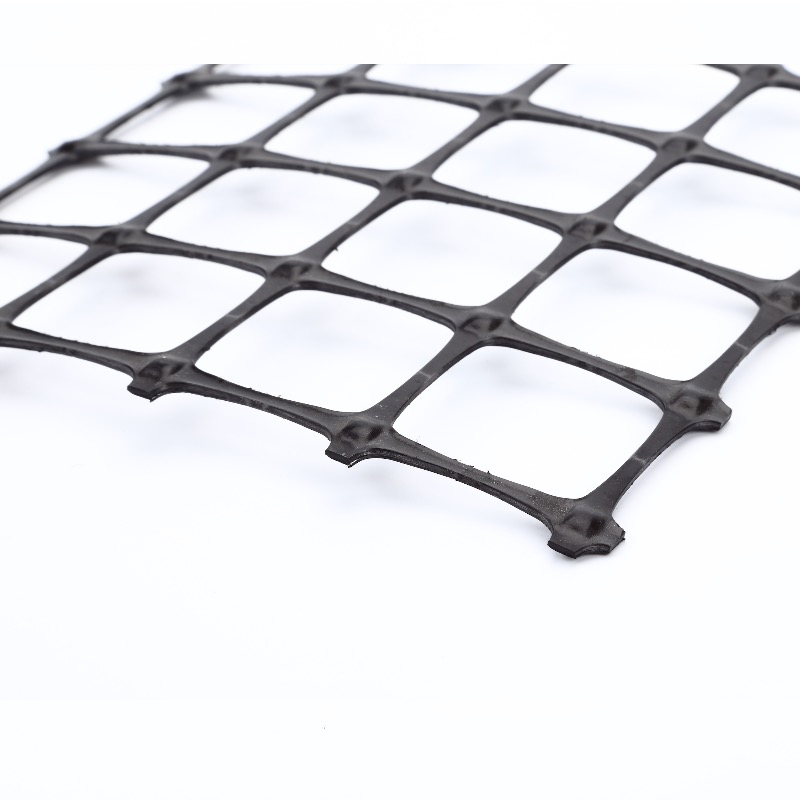
- Biaxial geogrids— Balanced strength in both directions (15–80 kN/m); square/rectangular apertures; used for shorter walls (≤10–15 m), secondary reinforcement, and load distribution.
- Triaxial/multiaxial geogrids— Multi-directional strength (30–400 kN/m); triangular apertures; superior interlock (15–25% better than biaxial per Tensar studies).
Critical Performance Parameters
- Tensile strength— Ultimate (Tult) 20–800+ kN/m longitudinal (uniaxial) or 15–80 kN/m both directions (biaxial); long-term design strength (LTDS) = Tult × reduction factors (creep, installation damage, durability).
- Elongation at break— ≤10–13% longitudinal for high stiffness.
- Creep rupture strength— >60–80% of Tult after 10,000 hours (ASTM D5262).
- Junction efficiency— >90–95% to ensure load transfer across intersections.
- Aperture size— 25–65 mm for optimal soil/aggregate interlock.
- Material— High-tenacity polyester (PET) for maximum strength/low creep; high-density polypropylene (PP) or HDPE for chemical/alkali resistance.
Design & Installation Principles
- Reinforcement length— 0.7–1.0 × wall height (FHWA NHI-10-024, NCMA).
- Vertical spacing— 300–600 mm (12–24 inches); closer for poor soils or seismic design.
- Facing options— Segmental concrete blocks (most common), welded wire, wrapped face with vegetation, or precast panels.
- Backfill— Well-graded granular (max 1.5 inch); compaction ≥95% Proctor; select fill in reinforced zone.
- Drainage— Chimney drains, perforated pipes, geocomposite strips to reduce pore pressure by 30–50%.
These technologies enable safe, economical, long-lasting retaining walls with significant material and cost savings.
How We Tested and Selected the Best Retaining Wall Grids
Selections combine:
- Lab tests: Tensile strength (ASTM D6637/ISO 10319), creep (ASTM D5262/ISO 13431), junction efficiency, reduction factors.
- Field installations: Highway MSE walls, bridge abutments, commercial retaining structures, residential slopes in 2025–2026.
- Metrics: Factor of safety achieved (1.5–2.0+), maximum wall height, cost savings (20–50%), installation speed, long-term stability.
- User input: Geotechnical engineers, contractors (performance, design ease, cost-effectiveness).
Prioritized high longitudinal tensile strength, low creep, junction efficiency, durability, cost-effectiveness, and proven performance in MSE retaining walls.
The 6 Best Retaining Wall Grids of 2026
1. BPM Geogrid Plastic Biaxial Geogrid (Best Overall Biaxial for Medium-Height Retaining Walls)
Category: High-Performance Plastic Biaxial Geogrid
Key Specifications: Material: High-density polypropylene (PP) or HDPE; Tensile strength: 15–40 kN/m both directions (TGSG15-15 to TGSG40-40); Strength at 2% elongation: ≥5–13 kN/m MD, ≥7–15 kN/m CMD; Strength at 5% elongation: ≤8–16 kN/m MD, ≤10–20 kN/m CMD; Elongation at break: ≤13% MD, ≤16% CMD; Aperture size: 25–65 mm uniform square/rectangular; Roll size: Width 3–6 m, length 50–100 m; Junction efficiency: >90%; Durability: High UV/chemical resistance, 50–100+ year design life (ASTM D4355); Certifications: ISO9001, ISO14001, SGS, Intertek
Wall Applications: MSE retaining walls up to 10–15 m, bridge approaches, commercial site grading
Price Range: $0.5–$3.5/m² (bulk)
BPM’s plastic biaxial geogrid delivers excellent bidirectional reinforcement and soil interlock at competitive pricing. In 2025–2026 MSE wall projects, it achieved FoS 1.5–1.8 for 6–12 m walls, reduced backfill volume by 25–40%, and showed minimal long-term deformation.
Pros:
- Balanced strength in both directions
- High junction efficiency & soil confinement
- Cost-effective for medium-height retaining walls
Cons:
- Lower ultimate strength than premium uniaxial for very tall walls
Our Take: Best overall retaining wall grid for medium-height MSE structures; exceptional value and proven reliability.
2. Tensar UX Uniaxial Geogrid Series
Category: Advanced High-Strength Uniaxial Geogrid
Key Specifications: Material: High-performance polypropylene or PET; Tensile strength: 35–400 kN/m longitudinal; Elongation at break: ≤10–12%; Creep-reduced strength: High; Junction efficiency: >90%; Roll size: Wide rolls
Wall Applications: Tall MSE retaining walls (10–30+ m), steep slopes, bridge abutments
Price Range: $2.0–$7.0/m²
High stiffness and low strain for permanent, high-load walls.
Pros:
- Exceptional long-term tensile capacity
- Low creep
- Proven in large-scale MSE projects
Cons:
- Premium pricing
Our Take: Best for tall and heavily loaded retaining wall grids.
3. HUESKER Fortrac Uniaxial Geogrid
Category: High-Modulus Polyester Uniaxial Geogrid Key Specifications: Material: High-tenacity PET; Tensile strength: 20–800 kN/m longitudinal; Elongation at break: ≤10–13%; Junction efficiency: >90–95%; Roll size: 1–5.5 m width Wall Applications: Tall retaining walls, steep reinforced slopes, seismic zones Price Range: $1.5–$8.0/m²
Industry-leading strength and creep performance.
Pros:
- Very high longitudinal capacity
- Low creep for permanent structures
- Seismic resistance
Cons:
- Higher cost at upper strength levels
Our Take: Top choice for very tall retaining wall grids and steep slopes.
4. StrataGrid SGU Uniaxial Geogrid
Category: High-Strength Uniaxial Geogrid Key Specifications: Material: High-tenacity polyester; Tensile strength: Up to 200–300 kN/m longitudinal; Low elongation; High LTDS Wall Applications: MSE walls, steep slopes, landslide repair Price Range: $1.5–$5.0/m²
Reliable for permanent, high-load structures.
Pros:
- High LTDS
- Good creep resistance
- Proven durability
Cons:
- Directional strength only
Our Take: Strong contender for tall retaining wall grids.
5. Mirafi XT-Series Uniaxial Geogrid
Category: High-Performance Uniaxial Geogrid Key Specifications: Material: High-modulus polyester; Tensile strength: Up to 200–350 kN/m longitudinal; Low creep; High junction efficiency Wall Applications: Tall walls, bridge abutments, steep slopes Price Range: $1.8–$6.0/m²
Low creep and high long-term strength.
Pros:
- Excellent creep performance
- Durable
- Reliable
Cons:
- Higher cost
Our Take: Great for permanent, high-load retaining wall grids.
6. NAUE Secugrid Q Uniaxial Geogrid
Category: Welded Uniaxial Geogrid Key Specifications: Material: Polyester or PP; Tensile strength: 20–400 kN/m longitudinal; Welded junctions; Low elongation Wall Applications: Tall reinforced soil slopes, MSE walls Price Range: $1.5–$6.0/m²
Welded construction for superior junction strength.
Pros:
- High junction efficiency
- Low creep
- Durable
Cons:
- Premium pricing
Our Take: Excellent for permanent steep slope and retaining wall reinforcement.
Comparison Table of the Top 6 Retaining Wall Grids
| Rank | Geogrid Model | Type | Tensile Strength (kN/m) Longitudinal | Elongation at Break | Junction Efficiency | Roll Width (m) | Price Range ($/m²) | Max Wall Height (typical) | Best For |
| 1 | BPM Plastic Biaxial Geogrid | Biaxial | 15–40 both | ≤13–16% | >90% | 3–6 | $0.5–$3.5 | 6–15 m | Medium MSE walls, cost-effective |
| 2 | Tensar UX Series | Uniaxial | 35–400 | ≤10–12% | >90% | Wide | $2.0–$7.0 | 12–25+ m | Tall/high-load MSE walls |
| 3 | HUESKER Fortrac | Uniaxial | 20–800 | ≤10–13% | >90–95% | 1–5.5 | $1.5–$8.0 | 15–30+ m | Very tall/steep reinforced slopes |
| 4 | StrataGrid SGU | Uniaxial | Up to 200–300 | Low | High | Wide | $1.5–$5.0 | 10–20 m | Permanent MSE walls |
| 5 | Mirafi XT-Series | Uniaxial | Up to 200–350 | Low | High | Wide | $1.8–$6.0 | 10–25 m | High-load permanent walls |
| 6 | NAUE Secugrid Q | Uniaxial | 20–400 | Low | High | Wide | $1.5–$6.0 | 12–25 m | Welded high-strength slopes |
Buying Advice for the Best Retaining Wall Grids
Wall Height & Type Selection
Biaxial for medium walls (6–15 m); uniaxial for tall walls (>10 m) and steep slopes.
Tensile Strength & Design
Match Tult to wall height/soil (50–200 kN/m longitudinal typical for 10–20 m walls); use FHWA/NCMA software for FoS.
Installation Best Practices
Longitudinal orientation perpendicular to wall; overlaps 300–1000 mm; compaction ≥95%; proper tensioning.
Durability & Long-Term Performance
PET for highest strength/low creep; PP/HDPE for chemical resistance; 75–120+ year life.
Cost & Project Savings
$0.5–$8.0/m²; expect 25–50% savings vs concrete walls; reduce fill volume 30–60%.
Customization for Large Projects
OEM/ODM (BPM Geogrid) for custom strengths, roll sizes — optimizes design and cost.
Final Thoughts
The top 6 best retaining wall grids of 2026 offer exceptional reinforcement, cost savings, and durability for MSE retaining structures. BPM Geogrid’s plastic biaxial geogrid stands out for balanced performance, consistent quality, competitive pricing, and proven success in real-world retaining wall projects.
Invest in high-quality geogrid mesh for stable, long-lasting retaining walls — contact suppliers like BPM Geogrid for technical data, project design support, samples, and quotes.


