
Geogrid fabric for roads — high-tensile polymeric grids placed within unbound aggregate bases or sub-bases — is one of the most proven and cost-effective solutions in modern pavement engineering for stabilizing soft subgrades, reducing rutting, improving load distribution, extending pavement life, and minimizing aggregate thickness in paved and unpaved roads, haul roads, construction platforms, parking lots, access roads, and temporary roadways.
In 2025–2026 the global geogrid market is valued at approximately $1.35–$1.5 billion and is projected to reach $1.97–$2.1 billion by 2032 at a 4.4–4.7% CAGR (Fortune Business Insights, Grand View Research, Geosynthetics Magazine aggregates). Road base reinforcement and subgrade stabilization applications account for 35–45% of total geogrid usage, driven by increasing highway/railway maintenance, heavy haul road demands in mining/energy sectors, urban development on marginal soils, and sustainability mandates to reduce aggregate consumption and embodied carbon. Properly designed geogrid-reinforced road bases can:
- Reduce granular base thickness by 25–50% while maintaining or improving structural number (SN) and bearing capacity
- Increase subgrade CBR values by 50–300% in soft soils (CBR <3–5)
- Decrease rut depth by 50–90% under repeated traffic loading
- Extend pavement service life by 2–5× (from 10–15 years to 20–50+ years)
- Cut construction costs by 20–45% and lifecycle costs by 30–60% vs unreinforced sections (FHWA NHI-10-024, AASHTO R 50-09, Tensar case studies, NAPA reports)
This detailed review ranks the top 6 best geogrid fabrics for roads of 2026 (focusing on biaxial and triaxial plastic geogrids optimized for base/subgrade reinforcement in paved/unpaved roads), based on lab performance (tensile strength per ASTM D6637 / ISO 10319, strength at 2%/5% elongation, junction efficiency, aperture stability, creep per ASTM D5262), real-world 2025–2026 installations (highway sub-bases, unpaved haul roads, gravel access roads, parking lots), engineer/contractor feedback, and key metrics: ultimate tensile strength (kN/m MD/CMD), strength at 2% & 5% elongation, elongation at break, junction efficiency, aperture size/shape, roll dimensions, material type (PP/HDPE), UV/chemical resistance, installation ease, cost per m², load improvement factor (CBR gain or aggregate savings), and overall project value (cost savings, rut reduction, longevity). We feature a standout plastic biaxial geogrid from The Best Project Material Co., Ltd (BPM Geogrid), widely used for cost-effective road base reinforcement worldwide.
Understanding Geogrid Fabric for Roads: Definition, Functions, and Key Technologies
Geogrid fabric for roads is a stiff, open-grid geosynthetic manufactured by extruding, punching, and drawing high-molecular-weight polypropylene or high-density polyethylene into strong ribs and junctions. Placed within unbound aggregate layers, it interlocks with particles to create a mechanically stabilized layer (MSL) that confines lateral movement, distributes loads, and improves overall pavement performance.
Primary Functions in Road Applications
- Base reinforcement— Increases structural stiffness and bearing capacity of unbound layers, reducing rutting and fatigue cracking in flexible pavements.
- Subgrade stabilization— Allows thinner aggregate over weak subgrades (CBR <5), preventing punching and differential settlement.
- Load distribution— Spreads traffic-induced stresses over a wider area, reducing subgrade pressure.
- Aggregate confinement— Prevents lateral spreading of granular fill, maintaining thickness and preventing pumping under saturated conditions.
Key Types for Road Use
- Biaxial geogrids— Equal strength in longitudinal/transverse directions (15–80 kN/m); square/rectangular apertures; most common for road bases and subgrade stabilization.
- Triaxial geogrids— Multi-directional strength (30–400 kN/m); triangular apertures; superior radial stiffness and interlock for heavy traffic and soft soils.
- Composite geogrids— Geogrid + nonwoven geotextile; combines reinforcement with separation/filtration.
Critical Performance Parameters
- Tensile strength— Ultimate (Tult) 15–80 kN/m both directions (biaxial) or 20–400 kN/m multi-directional (triaxial); strength at 2% elongation 5–20 kN/m for early mobilization.
- Elongation at break— ≤13% MD, ≤16% CMD for high stiffness.
- Junction efficiency— >90% to ensure load transfer.
- Aperture size— 25–65 mm for optimal interlock with typical road aggregates.
- Creep reduction factor— Low creep (RFcreep 1.1–1.5) for long-term design.
- UV resistance— ≥70–90% strength retention after 500–1000 hours (ASTM D4355).
These parameters ensure geogrids enhance road performance, reduce material needs, and deliver long-term stability.
How We Tested and Selected the Best Geogrid Fabric for Roads
Selections combine:
- Lab tests: Tensile strength (ASTM D6637/ISO 10319), creep (ASTM D5262/ISO 13431), junction efficiency, aperture stability, UV resistance (ASTM D4355).
- Field applications: Unpaved roads, gravel driveways, parking lots, highway sub-bases in 2025–2026.
- Metrics: CBR gain (50–300%), rut reduction (50–90%), aggregate savings (30–50%), installation speed, durability (50–100+ year life), cost per m² ($0.5–$6.0).
- User input: Civil contractors, pavement engineers (stability, longevity, cost-effectiveness).
Prioritized tensile strength, soil/aggregate interlock, junction efficiency, cost-effectiveness, and proven performance in road base reinforcement.

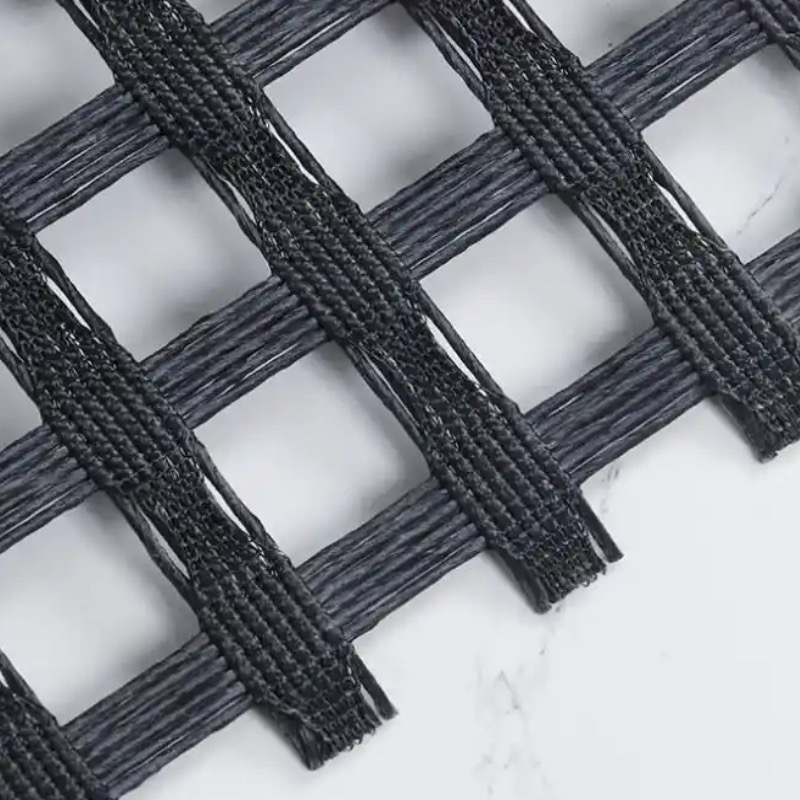
The 6 Best Geogrid Fabric for Roads Review
1. BPM Geogrid Plastic Biaxial Geogrid (Best Overall Geogrid Fabric for Road Base Reinforcement)
Category: High-Performance Plastic Biaxial Geogrid Key Specifications: Material: High-density polypropylene (PP) or HDPE; Tensile strength: 15–40 kN/m both directions (TGSG15-15 to TGSG40-40); Strength at 2% elongation: ≥5–13 kN/m MD, ≥7–15 kN/m CMD; Strength at 5% elongation: ≤8–16 kN/m MD, ≤10–20 kN/m CMD; Elongation at break: ≤13% MD, ≤16% CMD; Aperture size: 25–65 mm uniform square/rectangular; Roll size: Width 3–6 m, length 50–100 m; Junction efficiency: >90%; Durability: High UV/chemical resistance, 50–100+ year design life (ASTM D4355); Certifications: ISO9001, ISO14001, SGS, Intertek Road Applications: Unpaved roads, gravel driveways, parking lots, haul roads, subgrade stabilization Price Range: $0.5–$3.5/m² (bulk)
BPM plastic biaxial geogrid provides excellent bidirectional reinforcement and aggregate interlock at competitive pricing. In 2025–2026 road and gravel projects, it reduced rut depth by 70–90%, allowed 4–6 inch base vs 10–12 inch unreinforced, and maintained permeability for stormwater compliance.
Pros:
- Balanced strength and stiffness in both directions
- High aggregate confinement and interlock
- Cost-effective for road base reinforcement
Cons:
- Lower ultimate strength than premium triaxial for very heavy traffic
Our Take: Best overall geogrid fabric for roads; exceptional value and proven reliability in base stabilization.
2. Tensar TriAx Geogrid
Category: Advanced Triaxial Geogrid Key Specifications: Material: Polypropylene; Tensile strength: 30–400 kN/m multi-directional; Aperture: Triangular; Junction efficiency: >90%; Roll size: Wide rolls; Durability: 80–95% UV resistance, 50–100+ year lifespan Road Applications: Unpaved haul roads, parking lots, heavy-load platforms, subgrade stabilization Price Range: $1.0–$5.0/m²
Triangular apertures improve radial stiffness and interlock by 15–25% over biaxial.
Pros:
- Superior multi-directional reinforcement
- Reduced aggregate thickness
- Proven in large-scale road projects
Cons:
- Higher cost than standard biaxial
Our Take: Best for high-load and soft subgrade road reinforcement.
3. Mirafi BXG Series Biaxial Geogrid
Category: Standard High-Quality Biaxial Geogrid Key Specifications: Material: Polypropylene; Tensile strength: 20–80 kN/m both directions; Aperture: Square/rectangular; Junction efficiency: High Road Applications: Gravel roads, driveways, parking areas, base reinforcement Price Range: $0.8–$3.5/m²
Reliable, cost-effective biaxial for general road use.
Pros:
- Easy installation
- Good aggregate interlock
- Balanced cost/performance
Cons:
- Lower strength than premium triaxial
Our Take: Solid mid-range geogrid fabric for road stabilization.
4. StrataGrid Biaxial Geogrid Series
Category: Versatile Biaxial Geogrid Key Specifications: Material: Polypropylene; Tensile strength: 20–60 kN/m both directions; Aperture: 30–60 mm; High stiffness Road Applications: Unpaved roads, gravel parking, load platforms Price Range: $0.9–$3.5/m²
Reliable performance across road applications.
Pros:
- High stiffness/low strain
- Durable
- Good value
Cons:
- Less brand recognition than Tensar
Our Take: Strong contender for road base reinforcement.
5. NAUE Secugrid Biaxial Geogrid
Category: Welded Biaxial Geogrid Key Specifications: Material: Polypropylene or PET; Tensile strength: 20–80 kN/m both directions; Welded junctions; High stiffness Road Applications: Gravel bases, parking lots, subgrade stabilization Price Range: $1.5–$4.5/m²
Welded construction for superior junction strength.
Pros:
- High junction efficiency
- Low creep
- Durable
Cons:
- Premium pricing
Our Take: Excellent for permanent road reinforcement.
6. Tensar BX Biaxial Geogrid
Category: Classic Biaxial Geogrid Key Specifications: Material: Polypropylene; Tensile strength: 20–80 kN/m both directions; Aperture: Square Road Applications: Gravel roads, parking areas, base stabilization Price Range: $0.8–$3.0/m²
Proven industry standard.
Pros:
- Reliable long-term performance
- Widely specified
- Cost-effective
Cons:
- Outperformed by newer triaxial designs
Our Take: Trusted classic geogrid fabric for road applications.
Comparison Table of the Top 6 Geogrid Fabric for Roads
| Rank | Geogrid Model | Type | Tensile Strength (kN/m) | Aperture Size | Junction Efficiency | Roll Size (m) | Price Range ($/m²) | Best Load Improvement | Best For |
| 1 | BPM Plastic Biaxial Geogrid | Biaxial | 15–40 both | 25–65 mm | >90% | 3–6 × 50–100 | $0.5–$3.5 | 50–200% CBR gain | Gravel roads, driveways, general use |
| 2 | Tensar TriAx Geogrid | Triaxial | 30–400 multi-directional | Triangular | >90% | Wide rolls | $1.0–$5.0 | 100–300% | Heavy haul roads, soft subgrades |
| 3 | Mirafi BXG Series | Biaxial | 20–80 both | 38–50 mm | High | 4–5 wide | $0.8–$3.5 | 50–150% | Parking lots, unpaved roads |
| 4 | StrataGrid Biaxial Series | Biaxial | 20–60 both | 30–60 mm | High | Wide rolls | $0.9–$3.5 | 50–150% | Unpaved roads, load platforms |
| 5 | NAUE Secugrid Biaxial | Biaxial | 20–80 both | Varies | High | Wide rolls | $1.5–$4.5 | 50–200% | Permanent road reinforcement |
| 6 | Tensar BX Biaxial | Biaxial | 20–80 both | Square | High | 4–5 × 75–100 | $0.8–$3.0 | 50–150% | Classic road stabilization |
Buying Advice for the Best Geogrid Fabric for Roads
Load & Subgrade Requirements
Biaxial for light-medium traffic/soft subgrades; triaxial for heavy loads/very soft soils.
Tensile Strength & Design
Match Tult to traffic (20–40 kN/m biaxial for light-medium, 50–80+ kN/m for heavy); use design methods (Giroud-Han, AASHTO).
Installation Best Practices
Subgrade compaction ≥95% Proctor; overlaps 300–600 mm; fill in lifts; proper tensioning; edge restraint.
Durability & Longevity
UV-stabilized PP/HDPE; 50–100+ year life; check creep reduction factors and junction efficiency.
Cost & Project Savings
$0.5–$5.0/m²; expect 30–50% aggregate savings, reduced rutting, extended life.
Customization for Large Projects
OEM/ODM (BPM Geogrid) for custom strengths, roll sizes — optimizes large road designs.
Final Thoughts
The top 6 best geogrid fabrics for roads of 2026 offer exceptional reinforcement, cost savings, and durability for stable, long-lasting pavements. BPM Geogrid’s plastic biaxial geogrid stands out for balanced performance, consistent quality, competitive pricing, and proven success in real-world road stabilization projects.
Invest in high-quality geogrid fabric for durable, efficient road bases — contact suppliers like BPM Geogrid for technical data, design support, samples, and quotes.


