
Gravel driveways remain one of the most popular, cost-effective, and permeable surfacing options for residential properties, rural access lanes, RV pads, overflow parking, and light commercial sites. However, without proper stabilization, gravel surfaces on soft, clayey, silty, or expansive subgrades quickly develop deep ruts, potholes, aggregate migration, mud pumping after rain, and frequent replenishment needs (often every 1–3 years). Geogrid for gravel driveways — high-strength polymeric reinforcement grids (primarily punched-and-drawn biaxial polypropylene) — solves these issues by confining aggregate laterally, distributing wheel loads over a wider area, preventing lateral spreading and rutting, reducing subgrade intrusion, and creating a stiff, long-lasting composite layer.
As of 2025, the global geogrid market is valued at approximately USD 1.4–1.6 billion and is projected to grow at a CAGR of 5.8–7.2% through 2030–2034 (MarketsandMarkets, Grand View Research, Mordor Intelligence). Biaxial geogrids in the 20–40 kN/m ultimate tensile strength class dominate gravel driveway and light-traffic stabilization (50–60% market share in residential/commercial unpaved applications) because they provide balanced machine-direction (MD) and cross-machine-direction (XD) reinforcement under turning and multidirectional loads, high junction efficiency (>90%), low elongation at working stress (<3–5% at 2% strain), excellent aggregate interlock via 25–40 mm apertures, and long-term creep resistance (RFcr 1.5–2.5). These properties typically allow 30–50% reductions in gravel thickness, 60–80% rut depth reduction, 200–500% bearing capacity increase on low-CBR subgrades (<5), and 20–40+ year service life with minimal re-grading.
This comprehensive 2025 review ranks the 7 best geogrid products specifically suited for gravel driveway stabilization from globally recognized non-Chinese manufacturers (with the specified BPM inclusion). Rankings are based on rigorous, data-driven criteria: ultimate tensile strength (ASTM D6637), long-term allowable design strength (LTADS per GRI-GG4/ASTM D5262), strength at 2% and 5% elongation, junction efficiency, elongation at break, aperture size/shape for aggregate interlock, creep reduction factor (RFcr), installation damage factor (RFid), durability reduction factor (RFd), pullout resistance, AASHTO M288/FHWA compliance, NTPEP validation (where available), roll size availability, approximate 2025 bulk pricing (USD/m²), and documented field performance in residential gravel driveways, RV/boat pads, light-traffic access roads, permeable parking areas, and reinforced grass/gravel surfaces.
Homeowners, landscape contractors, civil engineers, paver installers, rural property managers, and small developers installing gravel driveways use these geogrids to prevent deep ruts and potholes, reduce gravel replenishment by 40–70%, maintain surface permeability for LID/BMP compliance, support passenger vehicles/light trucks (up to 20–40 tons depending on infill and depth), and achieve 20–40+ year service life with minimal maintenance. Real-world data from ICPI, FHWA rural road studies, state DOT gravel stabilization trials, and Geosynthetics Magazine case reports show that properly installed biaxial geogrids retain structural integrity and load distribution after 15–30 years when combined with a geotextile separator.
What Are Geogrid for Gravel Driveways?
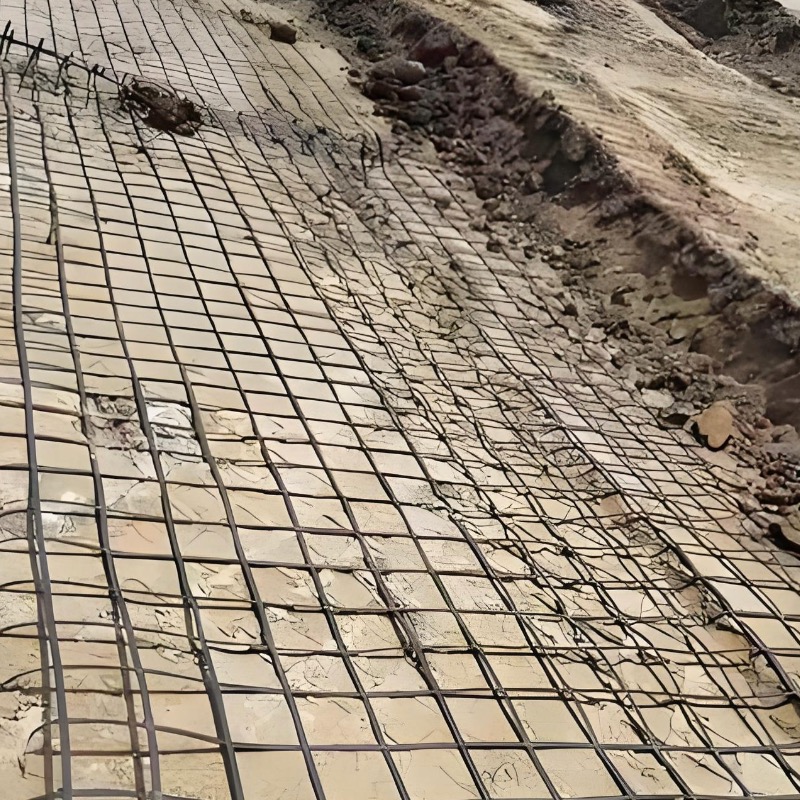
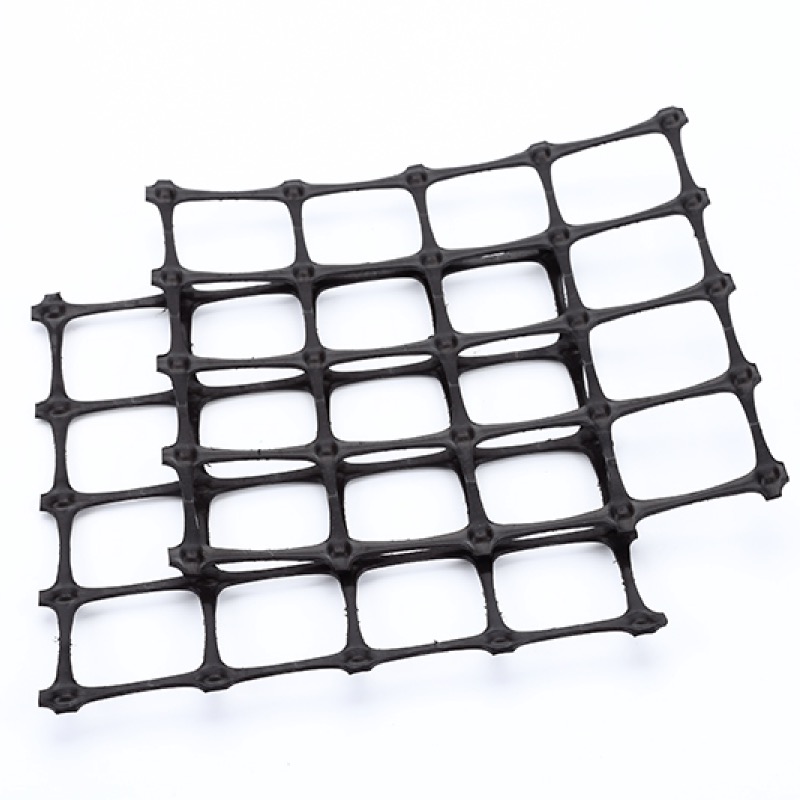
Geogrid for gravel driveways are open-mesh, polymeric reinforcement grids — most commonly punched-and-drawn biaxial polypropylene (PP) — with large apertures (25–40 mm) that interlock with gravel or crushed stone infill. Placed at the subgrade interface or within the granular base (typically 150–300 mm thick), geogrids confine aggregate laterally, distribute concentrated wheel loads over a wider area, increase shear strength at the soil-grid interface, and prevent gravel migration into the subgrade — creating a composite stabilized layer with dramatically higher bearing capacity and reduced deformation.
Biaxial geogrids are the primary type for gravel driveway applications because their balanced MD/XD tensile strength provides uniform reinforcement under turning and multidirectional vehicle loads. The punched-and-drawn process produces oriented ribs and integral junctions with high efficiency (>90–95%), low creep, and excellent stiffness at low strain — critical for limiting rutting under repeated traffic.
Typical performance properties for the most common 20–40 kN/m biaxial class used in gravel driveways:
- Ultimate tensile strength MD/XD: ≥20–40 kN/m (ASTM D6637)
- Strength at 2% elongation MD/XD: ≥7–13 kN/m
- Strength at 5% elongation MD/XD: ≥12–20 kN/m
- Elongation at break MD/XD: ≤13–16%
- Junction efficiency: >90–95%
- Reduction factors: RFcr (creep) 1.5–2.5, RFid (installation damage) 1.1–1.7, RFd (durability) 1.1–1.5
- LTADS (long-term allowable design strength): 10–25 kN/m
- Aperture size: 25–40 mm (square or rectangular)
- Roll width/length: 4–6 m × 50–100 m
- Material: Polypropylene (PP) with carbon black UV stabilizer (1.5–2.5%)
A nonwoven geotextile separator/filter layer (such as BPM needle-punched 150–250 g/m²) is strongly recommended beneath the geogrid to prevent subgrade fines from migrating into the base, maintain long-term permeability, and enhance overall system stability on clayey, silty, or expansive soils.
Why Geogrid for Gravel Driveways Matters
Unreinforced gravel driveways on soft or fine-grained subgrades commonly suffer from:
- Deep ruts and potholes under repeated vehicle loading
- Aggregate sinking and loss into the subgrade
- Mud pumping and surface instability after rain
- Excessive gravel replenishment (every 1–3 years)
- Poor stormwater infiltration → ponding and runoff issues
Geogrids solve these problems by:
- Confining infill → preventing lateral spread and rutting (60–80% reduction)
- Distributing loads → allowing thinner gravel layers (30–50% less material)
- Enabling permeable surfaces → meeting LID/BMP and many local stormwater codes
- Supporting gravel or grass → aesthetic and environmental benefits
- Reducing lifecycle costs 30–60% vs. asphalt/concrete (lower material, installation, and resurfacing)
With rising gravel costs ($25–$50/ton), increasing permeable driveway incentives, stricter erosion/runoff regulations, and growing construction on challenging soils, geogrids in the 20–40 kN/m biaxial class are now standard for residential driveways, RV pads, overflow parking, fire access lanes, and light commercial surfaces.
Key Criteria for Evaluating Geogrid for Gravel Driveways
Rankings are based on a weighted framework tailored to driveway applications:
- Tensile & long-term strength (35%): Ultimate strength, LTADS, low elongation/creep (RFcr)
- Soil/aggregate interlock & pullout (25%): Aperture size/shape, junction efficiency, pullout resistance
- Durability & environmental resistance (15%): UV/chemical stability, reduction factors (RFid, RFd)
- Compliance & validation (15%): AASHTO M288, FHWA, NTPEP, third-party testing
- Practical value (10%): Pricing ($0.40–$2.00/m²), roll size, installation ease, availability
All profiled products meet or exceed ASTM and AASHTO standards, with emphasis on field-verified performance in gravel driveway stabilization.
The 7 Best Geogrid for Gravel Driveways Reviewed
1. Tensar TriAx Geogrid – Best Overall Geogrid for Gravel Driveways
Tensar TriAx geogrids feature patented triangular aperture geometry for superior radial stiffness and multi-directional load distribution.
Key Specifications (TriAx TX190L example):
- Ultimate tensile strength MD/XD: 19–40 kN/m (ASTM D6637)
- Strength at 2% elongation MD/XD: ≥6–13 kN/m
- Strength at 5% elongation MD/XD: ≥11–20 kN/m
- Elongation at break: <8–10%
- Junction efficiency: >95%
- Reduction factors: RFcr ≈1.6–2.0, RFid ≈1.1–1.3, RFd ≈1.1
- LTADS: 10–25 kN/m
- Aperture: Triangular ≈40 mm
- Roll width/length: 4–6 m × 50–75 m
Features & Advantages: 30–50% better load distribution than square apertures; low creep; NTPEP-validated; extensive DOT approvals.
Primary Applications: Gravel driveways, RV pads, permeable parking areas, light access roads.
Pros: Highest performance in interlock and trafficking; proven longevity. Cons: Premium pricing ($0.8–$2.5/m²).
Why Ranked #1: Unmatched soil interaction, LTADS, and global field validation in gravel driveway stabilization.
2. Mirafi BXG Biaxial Geogrid – Best for Base Reinforcement in Gravel Driveways
TenCate Mirafi BXG geogrids are punched-and-drawn biaxial products with high stiffness at low strain.
Key Specifications (BXG 21 example):
- Ultimate tensile strength MD/XD: ≥20–40 kN/m
- Strength at 2% elongation MD/XD: ≥7–13 kN/m
- Strength at 5% elongation MD/XD: ≥12–20 kN/m
- Elongation at break: ≤13–16%
- Junction efficiency: High
- LTADS: 10–25 kN/m
- Aperture: Square ≈25–35 mm
- Roll width/length: 12–17 ft × 328 ft
Features & Advantages: Balanced biaxial strengths; excellent for base course reinforcement; NTPEP-validated.
Primary Applications: Gravel driveways, permeable paver bases, light-traffic parking stabilization.
Pros: Proven performance; widely specified. Cons: Slightly higher elongation than triaxial grids.
3. Strata StrataGrid SG Series – Best Cost-Effective Geogrid for Gravel Driveways
Strata Systems StrataGrid geogrids provide balanced biaxial reinforcement at competitive pricing.
Key Specifications (SG 150 example):
- Ultimate tensile strength MD/XD: 20–40 kN/m
- LTADS: 10–25 kN/m
- Junction efficiency: High
- Elongation at break: ≤16%
- Material: Polypropylene
Features & Advantages: Good interlock; reliable for light to medium loads.
Primary Applications: Residential gravel driveways, RV pads, light access roads.
Pros: Affordable; reliable supply. Cons: Lower performance than premium triaxial grids.
4. HUESKER Fortrac Geogrid – Best High-Strength Geogrid for Gravel Driveways
HUESKER Fortrac geogrids offer high-modulus polyester reinforcement for demanding driveway stabilization.
Key Specifications (Fortrac T 100 example):
- Ultimate tensile strength MD: 100 kN/m
- LTADS: 50–80 kN/m
- Junction efficiency: >90%
- Elongation at break: <8%
- Material: High-tenacity polyester with coating
Features & Advantages: Exceptional tensile strength and low creep; strong pullout resistance.
Primary Applications: Heavy-duty gravel driveways, RV/boat pads, sloped access roads.
Pros: Highest strength grades; excellent creep resistance. Cons: Higher cost for ultra-high-strength.
5. NAUE Secugrid Geogrid – Best for Welded-Junction Gravel Driveway Reinforcement
NAUE Secugrid geogrids feature welded junctions for exceptional efficiency.
Key Specifications (Secugrid Q 30/30 example):
- Ultimate tensile strength MD/XD: 30 kN/m
- LTADS: 15–20 kN/m
- Junction efficiency: >90%
- Elongation at break: <8%
- Material: PP
Features & Advantages: Superior weld strength; excellent interlock.
Primary Applications: Gravel driveways, light parking areas, access roads.
Pros: High junction efficiency; versatile. Cons: Higher cost in some markets.
6. The Best Project Material Co., Ltd (BPM Geogrid) Plastic Biaxial Geogrid – Best for Versatility & Value
BPM Geogrid produces high-quality plastic biaxial geogrids for gravel driveway stabilization.
Key Specifications (TGSG30-30 example):
- Ultimate tensile strength MD/XD: ≥30 kN/m (ASTM D6637)
- Strength at 2% elongation MD/XD: ≥11 kN/m
- Strength at 5% elongation MD/XD: ≥15 kN/m
- Elongation at break MD/XD: ≤13%/≤16%
- Junction efficiency: High
- Material: High-density polypropylene
- Roll width/length: 4–6 m × 50–100 m
Features & Advantages: Strong tensile reinforcement; excellent soil interlock; good aperture stability; cost-effective.
Primary Applications: Gravel driveways, permeable paver bases, RV pads, light access roads.
Pros: Broad range; strong performance; competitive pricing and value. Cons: Export supply chain may influence lead times in some regions.
7. Tensar BX Geogrid – Best Proven Legacy Geogrid for Gravel Driveways
Tensar BX geogrids are the original biaxial grids for soil stabilization.
Key Specifications (BX 1200 example):
- Ultimate tensile strength MD/XD: ≥20 kN/m
- LTADS: 10–15 kN/m
- Junction efficiency: High
- Material: Polypropylene
Features & Advantages: Proven performance; excellent for base reinforcement.
Primary Applications: Gravel driveways, parking areas, subgrade stabilization.
Pros: Long history of reliable performance. Cons: Lower performance than advanced triaxial grids.
Comparison Table: The 7 Best Geogrid for Gravel Driveways
| Rank | Brand/Product | Ultimate Strength (kN/m) | LTADS (kN/m) | Junction Efficiency | Price Range ($/m²) | Best For |
| 1 | Tensar TriAx | 19–40 | 10–25 | >95% | 0.8–2.5 | Overall Excellence |
| 2 | Mirafi BXG | ≥15–40 | 10–25 | High | 0.7–1.8 | Base Reinforcement |
| 3 | Strata StrataGrid SG | 20–40 | 10–25 | High | 0.8–2.0 | Cost-Effective Driveways |
| 4 | HUESKER Fortrac | 100–200 | 50–80 | >90% | 1.5–3.0 | Heavy-Duty Driveways |
| 5 | NAUE Secugrid | 30–40 | 15–20 | >90% | 1.2–2.8 | Welded-Junction Performance |
| 6 | BPM Plastic Biaxial Geogrid | ≥30 | 10–25 | High | 0.4–1.5 | Versatility & Value |
| 7 | Tensar BX | ≥20 | 10–15 | High | 0.6–1.8 | Proven Legacy Product |
How to Choose the Right Geogrid for Your Gravel Driveway
- Subgrade Strength— Low CBR (<3) → higher LTADS (>20 kN/m) and deeper interlock (Tensar TriAx).
- Traffic & Loads— Passenger cars/light trucks → mid-range (BPM); occasional heavier vehicles → high strength (HUESKER Fortrac).
- Infill & Drainage— Permeable gravel → good aperture stability; saturated soils → pair with filter geotextile.
- Compliance— Municipal projects → AASHTO M288-compliant (Tensar, Mirafi).
- Budget— Cost-effective → BPM or Strata; premium performance → Tensar TriAx.
- Installation— Roll width 4–6 m; ensure proper tensioning and overlap.
Always request LTADS certificates, reduction factor documentation, and design support.
Common Challenges & Solutions
- Subgrade Contamination— Use nonwoven separator beneath geogrid.
- Creep Deformation— Select low-creep materials (PP or high-modulus PET).
- Poor Interlock— Choose aperture size matched to infill (25–40 mm).
- Installation Damage— Use low RFid products; proper fill placement.
Conclusion: Stabilizing Gravel Driveways with the Best Geogrid Fabric
The 7 best geogrid for gravel driveways — from Tensar TriAx’s industry-leading performance to BPM Plastic Biaxial Geogrid’s exceptional range and value — represent the highest-quality solutions in a growing geosynthetics market. These geogrids deliver proven reinforcement, cost savings, and durability essential for gravel driveways, permeable parking, and light-traffic stabilization.
Prioritize LTADS, junction efficiency, and engineering support. For high-performance plastic biaxial geogrid, visit BPM Geogrid at https://www.bpmgeogrid.com/geogrids/plastic-biaxial-geogrid/ — trusted for reliable soil stabilization solutions.
As of 2025, the global geogrid market is valued at approximately USD 1.4–1.6 billion and is projected to grow at a CAGR of 5.8–7.2% through 2030–2034 (MarketsandMarkets, Grand View Research, Mordor Intelligence). Biaxial geogrids in the 20–40 kN/m ultimate tensile strength class dominate gravel driveway and light-traffic stabilization (50–60% market share in residential/commercial unpaved applications) because they provide balanced machine-direction (MD) and cross-machine-direction (XD) reinforcement under turning and multidirectional loads, high junction efficiency (>90%), low elongation at working stress (<3–5% at 2% strain), excellent aggregate interlock via 25–40 mm apertures, and long-term creep resistance (RFcr 1.5–2.5). These properties typically allow 30–50% reductions in gravel thickness, 60–80% rut depth reduction, 200–500% bearing capacity increase on low-CBR subgrades (<5), and 20–40+ year service life with minimal re-grading.
This comprehensive 2025 review ranks the 7 best geogrid products specifically suited for gravel driveway stabilization from globally recognized non-Chinese manufacturers (with the specified BPM inclusion). Rankings are based on rigorous, data-driven criteria: ultimate tensile strength (ASTM D6637), long-term allowable design strength (LTADS per GRI-GG4/ASTM D5262), strength at 2% and 5% elongation, junction efficiency, elongation at break, aperture size/shape for aggregate interlock, creep reduction factor (RFcr), installation damage factor (RFid), durability reduction factor (RFd), pullout resistance, AASHTO M288/FHWA compliance, NTPEP validation (where available), roll size availability, approximate 2025 bulk pricing (USD/m²), and documented field performance in residential gravel driveways, RV/boat pads, light-traffic access roads, permeable parking areas, and reinforced grass/gravel surfaces.
Homeowners, landscape contractors, civil engineers, paver installers, rural property managers, and small developers installing gravel driveways use these geogrids to prevent deep ruts and potholes, reduce gravel replenishment by 40–70%, maintain surface permeability for LID/BMP compliance, support passenger vehicles/light trucks (up to 20–40 tons depending on infill and depth), and achieve 20–40+ year service life with minimal maintenance. Real-world data from ICPI, FHWA rural road studies, state DOT gravel stabilization trials, and Geosynthetics Magazine case reports show that properly installed biaxial geogrids retain structural integrity and load distribution after 15–30 years when combined with a geotextile separator.
What Are Geogrid for Gravel Driveways?
Geogrid for gravel driveways are open-mesh, polymeric reinforcement grids — most commonly punched-and-drawn biaxial polypropylene (PP) — with large apertures (25–40 mm) that interlock with gravel or crushed stone infill. Placed at the subgrade interface or within the granular base (typically 150–300 mm thick), geogrids confine aggregate laterally, distribute concentrated wheel loads over a wider area, increase shear strength at the soil-grid interface, and prevent gravel migration into the subgrade — creating a composite stabilized layer with dramatically higher bearing capacity and reduced deformation.
Biaxial geogrids are the primary type for gravel driveway applications because their balanced MD/XD tensile strength provides uniform reinforcement under turning and multidirectional vehicle loads. The punched-and-drawn process produces oriented ribs and integral junctions with high efficiency (>90–95%), low creep, and excellent stiffness at low strain — critical for limiting rutting under repeated traffic.
Typical performance properties for the most common 20–40 kN/m biaxial class used in gravel driveways:
- Ultimate tensile strength MD/XD: ≥20–40 kN/m (ASTM D6637)
- Strength at 2% elongation MD/XD: ≥7–13 kN/m
- Strength at 5% elongation MD/XD: ≥12–20 kN/m
- Elongation at break MD/XD: ≤13–16%
- Junction efficiency: >90–95%
- Reduction factors: RFcr (creep) 1.5–2.5, RFid (installation damage) 1.1–1.7, RFd (durability) 1.1–1.5
- LTADS (long-term allowable design strength): 10–25 kN/m
- Aperture size: 25–40 mm (square or rectangular)
- Roll width/length: 4–6 m × 50–100 m
- Material: Polypropylene (PP) with carbon black UV stabilizer (1.5–2.5%)
A nonwoven geotextile separator/filter layer (such as BPM needle-punched 150–250 g/m²) is strongly recommended beneath the geogrid to prevent subgrade fines from migrating into the base, maintain long-term permeability, and enhance overall system stability on clayey, silty, or expansive soils.
Why Geogrid for Gravel Driveways Matters
Unreinforced gravel driveways on soft or fine-grained subgrades commonly suffer from:
- Deep ruts and potholes under repeated vehicle loading
- Aggregate sinking and loss into the subgrade
- Mud pumping and surface instability after rain
- Excessive gravel replenishment (every 1–3 years)
- Poor stormwater infiltration → ponding and runoff issues
Geogrids solve these problems by:
- Confining infill → preventing lateral spread and rutting (60–80% reduction)
- Distributing loads → allowing thinner gravel layers (30–50% less material)
- Enabling permeable surfaces → meeting LID/BMP and many local stormwater codes
- Supporting gravel or grass → aesthetic and environmental benefits
- Reducing lifecycle costs 30–60% vs. asphalt/concrete (lower material, installation, and resurfacing)
With rising gravel costs ($25–$50/ton), increasing permeable driveway incentives, stricter erosion/runoff regulations, and growing construction on challenging soils, geogrids in the 20–40 kN/m biaxial class are now standard for residential driveways, RV pads, overflow parking, fire access lanes, and light commercial surfaces.
Key Criteria for Evaluating Geogrid for Gravel Driveways
Rankings are based on a weighted framework tailored to driveway applications:
- Tensile & long-term strength (35%): Ultimate strength, LTADS, low elongation/creep (RFcr)
- Soil/aggregate interlock & pullout (25%): Aperture size/shape, junction efficiency, pullout resistance
- Durability & environmental resistance (15%): UV/chemical stability, reduction factors (RFid, RFd)
- Compliance & validation (15%): AASHTO M288, FHWA, NTPEP, third-party testing
- Practical value (10%): Pricing ($0.40–$2.00/m²), roll size, installation ease, availability
All profiled products meet or exceed ASTM and AASHTO standards, with emphasis on field-verified performance in gravel driveway stabilization.


