
Geogrids play a pivotal role in modern civil engineering and construction projects, offering cost-effective soil reinforcement solutions that enhance stability, reduce material usage, and extend infrastructure lifespan. As of 2026, the global geogrid market is valued at approximately USD 1.35-1.41 billion, with projections to reach USD 1.97-2.5 billion by 2032-2033, growing at a compound annual growth rate (CAGR) of 4.4-7%. This growth is driven by increasing infrastructure investments, urbanization, and demand for sustainable geosynthetics in road construction, retaining walls, and slope stabilization.
Geogrid costs in 2026 typically range from $0.50 to $7.00 per square meter (or $0.05 to $0.70 per square foot), depending on various factors. This ultimate guide provides a detailed breakdown of geogrid pricing, influencing elements, and practical insights to help engineers, contractors, and project managers make informed decisions. Data is drawn from industry reports and market analyses for accuracy and relevance.
For tailored solutions and competitive pricing, consider obtaining quotes from established manufacturers like The Best Project Material Co., Ltd (BPM Geogrid), known for high-quality geogrids meeting international standards.
1. What Are Geogrids?
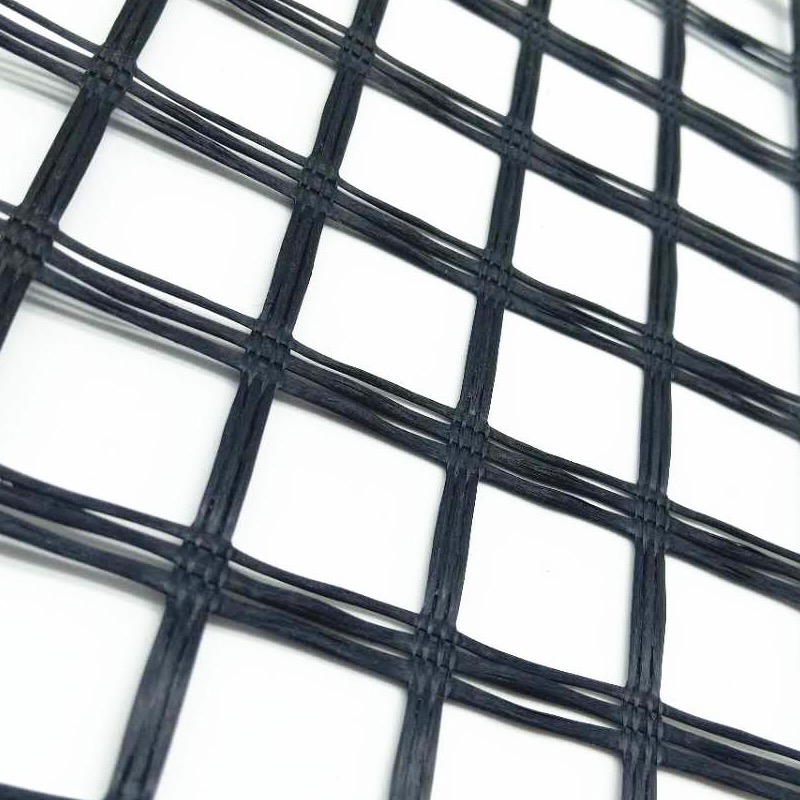
Geogrids are high-strength, polymer-based geosynthetic materials designed to reinforce soil and distribute loads effectively. Manufactured through extrusion, weaving, or welding processes, they feature an open grid structure that interlocks with soil, aggregate, or other fill materials, creating a mechanically stabilized layer.
Common Applications of Geogrids
- Road and pavement stabilization (reduces base thickness by 30-50%)
- Retaining walls and steep slopes (supports heights up to 50+ meters)
- Foundation reinforcement for embankments and landfills
- Railway trackbed stabilization
- Erosion control and mining applications
Key Types of Geogrids
Geogrids are classified by structure and strength direction:
- Uniaxial Geogrids— High tensile strength in one direction (machine direction), ideal for retaining walls and slopes; typical strength 40-200+ kN/m.
- Biaxial Geogrids— Balanced strength in both directions, suited for subgrade stabilization and roads; strength 20-60 kN/m per direction.
- Triaxial Geogrids— Multi-directional strength for superior load distribution; often used in heavy-duty pavements; strength up to 100+ kN/m.
Materials include polypropylene (PP), high-density polyethylene (HDPE), polyester (PET), and fiberglass, each offering unique durability and chemical resistance.

2. How Much Does a Geogrid Cost?
Geogrid pricing in 2026 varies significantly, with average costs falling between $0.50 and $7.00 per square meter (excluding installation). This range reflects advancements in manufacturing and material efficiencies, as reported in market analyses from 2025-2026.
2.1 Geogrid Cost – Type and Structure
The type directly impacts pricing due to manufacturing complexity and performance.
2.1.1 Uniaxial Geogrids
- Cost Range: $0.50–$2.50 per m²
- Reasons: Simpler extrusion process; higher strength in one direction.
- Examples: Used in retaining walls; tensile strength 40-600 kN/m; suitable for projects requiring directional reinforcement.
2.1.2 Biaxial Geogrids
- Cost Range: $0.70–$3.50 per m²
- Reasons: Balanced properties for broader applications; dominate road projects (over 60% market share).
- Examples: PP/HDPE variants at $0.70–$1.20/m²; reduce aggregate needs by 20-40%.
2.1.3 Triaxial Geogrids
- Cost Range: $1.50–$5.00 per m²
- Reasons: Advanced triangular aperture design for optimal interlocking; premium performance in load distribution.
- Examples: High-strength models up to $7.00/m² for heavy traffic roads.
2.1.4 Specialized Geogrids (e.g., Fiberglass, PET, Carbon Fiber)
- Cost Range: $0.90–$7.00 per m²
- Reasons: Enhanced chemical/UV resistance; fiberglass $0.90–$1.50/m²; PET $1.00–$1.80/m².
2.2 Geogrid Cost – Tensile Strength and Specifications
Higher tensile strength commands premium pricing:
- Low Strength (20-40 kN/m): $0.50–$1.50/m²(light-duty stabilization)
- Medium Strength (40-100 kN/m): $1.50–$3.00/m²(standard roads/walls)
- High Strength (>100-600 kN/m): $3.00–$7.00/m²(heavy embankments/mining)
Aperture size (25-100 mm) and roll dimensions (e.g., 4m x 50m) also influence unit costs.
2.3 Geogrid Cost – Material and Manufacturing Process
- Polypropylene (PP)/HDPE→ Most cost-effective ($0.70–$2.00/m²); extruded for durability.
- Polyester (PET)→ Higher creep resistance; $1.00–$3.00/m².
- Fiberglass/Coated Variants→ Superior longevity; $1.50+/m².
- Extruded geogrids are generally 10-20% cheaper than woven ones due to scalable production.
2.4 Geogrid Cost – Project Size and Order Volume
Bulk orders significantly reduce costs:
- Small Projects (<5,000 m²): $2.00–$7.00/m²(higher per-unit due to logistics)
- Medium Projects (5,000-50,000 m²): $1.00–$3.50/m²
- Large Projects (>50,000 m²): $0.50–$2.00/m²(volume discounts up to 30%)
Suppliers like BPM Geosynthetics offer tiered pricing for large-scale infrastructure.
2.5 Geogrid Cost – Raw Material Quality and Certifications
- Virgin polymer products (preferred for longevity): 10-20% higher than recycled.
- Certifications (ISO 9001, CE, GRI-GG): Add value but increase costs by 5-15%.
- Eco-friendly recycled geogrids: $0.50–$3.00/m², 5-10% savings.
2.6 Geogrid Cost – Transportation and Logistics
Freight can add $0.10–$0.50/m², depending on distance and roll weight (typically 50-100 kg/roll). Wide rolls (up to 5.95m) minimize seams and shipping volumes.
2.7 Geogrid Cost – Installation and Total Project Expenses
- Material Only: $0.50–$7.00/m²
- Installation Labor/Equipment: $0.50–$2.00/m²(simple rollout; overlaps 300-500mm)
- Total Installed Cost: $1.00–$9.00/m²
- Long-Term Savings: Geogrids reduce aggregate thickness by 25-50%, yielding ROI within 2-5 years.
2.8 Geogrid Cost – Maintenance and Lifetime Value
Geogrids require minimal maintenance, with service lives of 50-120 years. Lifetime costs are 30-50% lower than traditional methods.
3. How to Choose the Right Geogrid
Selecting the optimal geogrid ensures project efficiency and cost savings.
3.1 Assess Project Requirements
Evaluate soil type, load demands, and environmental conditions (e.g., uniaxial for walls, triaxial for pavements).
3.2 Prioritize Quality and Performance
Opt for products with verified tensile strength (>95% retention after 500 hours UV exposure) and interlocking efficiency.
3.3 Evaluate Installation Needs
Choose roll sizes and aperture designs that minimize labor (e.g., wide rolls reduce seams by 20%).
3.4 Consider Long-Term Costs and Sustainability
Factor in durability and eco-materials; geogrids can cut overall project costs by 20-40%.
3.5 Compare Suppliers and Request Quotes
Seek manufacturers with proven track records, such as The Best Project Material Co., Ltd (BPM Geosynthetics), offering customized solutions and competitive pricing.
4. Industry Trends Affecting Geogrid Costs
- Sustainability— Recycled and bio-based geogrids gaining traction, potentially reducing costs by 5-10% by 2030.
- Technological Advancements— Triaxial designs and smart monitoring integrations increasing premium segment prices.
- Raw Material Fluctuations— Polymer prices influence 40-50% of costs; stable in 2026 but monitor global supply chains.
- Wider Rolls and Automation— Reducing manufacturing and installation expenses by 10-15%.
5. Conclusion
Geogrid costs in 2026 range from $0.50 to $7.00 per square meter, influenced primarily by type, strength, material, and project scale. While upfront expenses vary, geogrids deliver substantial long-term savings through enhanced stability and reduced material needs—often 30-50% lower lifecycle costs compared to conventional methods.
For accurate budgeting and optimal performance, consult experienced suppliers. Contact The Best Project Material Co., Ltd (BPM Geosynthetics) today for free quotes tailored to your project’s specifications. Their expertise in high-quality uniaxial, biaxial, and triaxial geogrids ensures reliable, cost-effective solutions.


